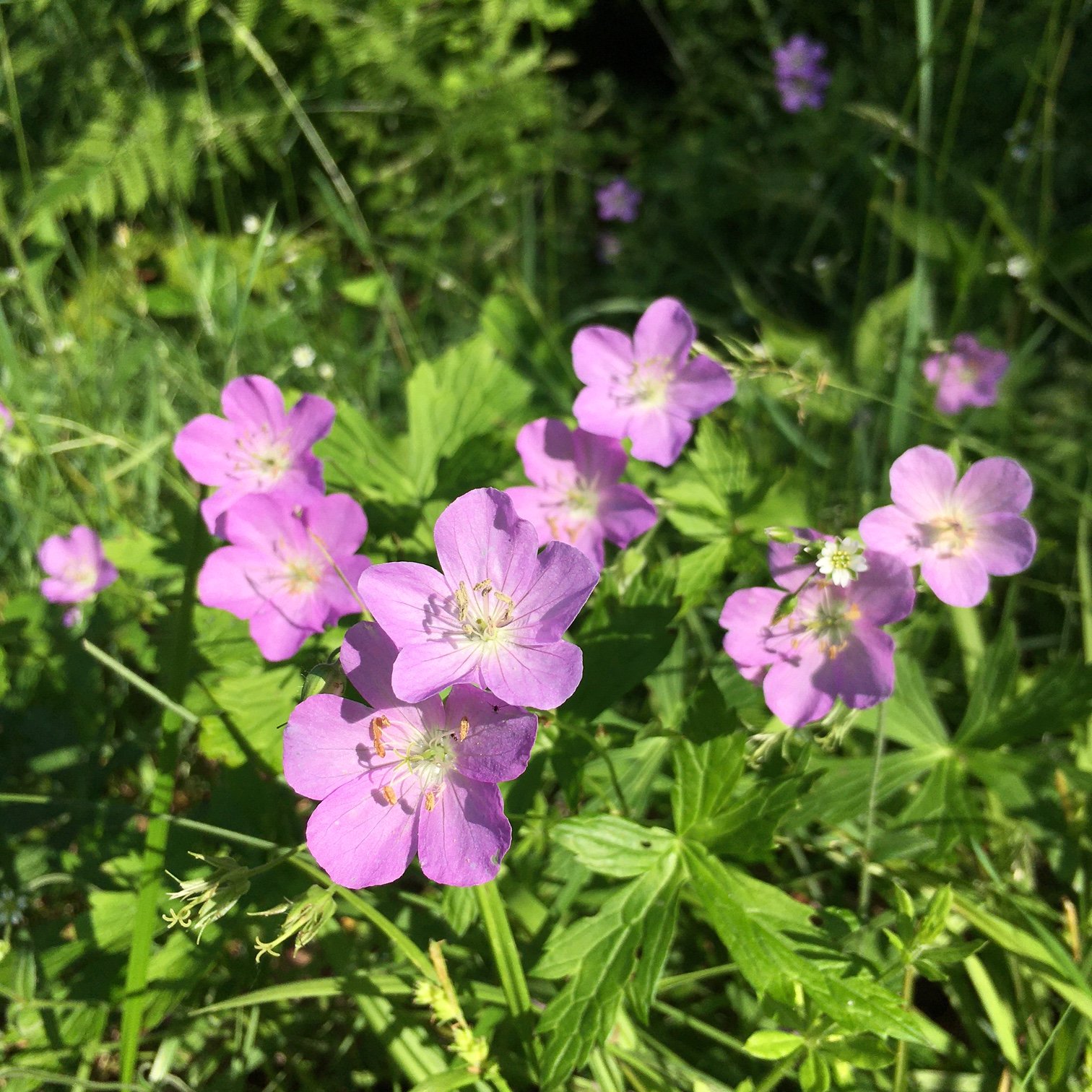
Geranium maculatum

from $9.00
Coming Soon

Geranium maculatum | Wild geranium

Native to eastern deciduous woodlands, wild geranium is a charming wildflower that produces an abundance of pale pink or light lavender flowers in May and early June. In a garden setting, plants will form tidy clumps reaching 18-24”, but this species is also surprisingly tolerant of competition, growing well among dense plant communities found in rich meadows and fields. With ample moisture, wild geranium will produce the most flowers and grow happily in full sun, but it also thrives in part shade or the filtered light of an open deciduous canopy. After flowering, the namesake “crane’s bill” fruit capsule forms, which looks like a long beak and is distinctive because it forcibly and enthusiastically ejects its seeds when ripe. This makes this species challenging to collect seeds from in the wild, but you’ll likely find volunteer plants popping up in new spaces in the garden. Prefers humus-rich soils and may go dormant after setting seed in dry summers but persists by shallow rhizomes. When plants do not go dormant, the foliage often turns hues of red and orange in the fall.

LOCAL ECOTYPE.

We typically only produce one crop of wild geranium each year. Expected in June.

Container Size:

Geranium maculatum | Wild geranium

Native to eastern deciduous woodlands, wild geranium is a charming wildflower that produces an abundance of pale pink or light lavender flowers in May and early June. In a garden setting, plants will form tidy clumps reaching 18-24”, but this species is also surprisingly tolerant of competition, growing well among dense plant communities found in rich meadows and fields. With ample moisture, wild geranium will produce the most flowers and grow happily in full sun, but it also thrives in part shade or the filtered light of an open deciduous canopy. After flowering, the namesake “crane’s bill” fruit capsule forms, which looks like a long beak and is distinctive because it forcibly and enthusiastically ejects its seeds when ripe. This makes this species challenging to collect seeds from in the wild, but you’ll likely find volunteer plants popping up in new spaces in the garden. Prefers humus-rich soils and may go dormant after setting seed in dry summers but persists by shallow rhizomes. When plants do not go dormant, the foliage often turns hues of red and orange in the fall.

LOCAL ECOTYPE.

We typically only produce one crop of wild geranium each year. Expected in June.

HABIT

Height: 12-24”

Bloom Time: spring

SITE CONDITIONS

Light: full sun, part shade

Soil: medium-wet, average, medium-dry

CULTIVATION TIPS

Establishment: easy, no special requirements

Deer Resistance: high

INTERACTIONS

Pollinator Support: very high

Other: pollen and nectar plant for locally at-risk pollinators

CONSERVATION

Native Range: local ecotype

Seed Origin: Fairfield County, CT